Planning & Design Concept
1-1. Why was The Move made?
The recent metaverse boom produced a great deal of virtual-space content, but most of it falls into one of two camps—function-driven content from states, institutions, and organizations, or the auteur-driven work of individual artists. Content that deeply explores the architectural and design qualities particular to virtual space1, and builds on them, remains scarce.
Just as the steel frame, the curtain wall, and the elevator opened the age of the skyscraper, the arrival of virtual space could mark a paradigm shift for architecture, space, and design. Yet we felt a certain regret that the content being made either simply replicates real-world architecture or, at the other extreme, bears no relation to reality at all.
And so we set out to study the characteristics of virtual space from the standpoint of architectural design, and to create a work of virtual-space architecture that gives them form.
1-2. Why the Barcelona Pavilion?
Ludwig Mies van der Rohe (hereafter Mies)—who held that “architecture is always the will of an age translated into space”—is among the masters of modern architecture. His Barcelona Pavilion, designed in 1929, is built minimally and abstractly from materials such as marble, glass, and steel; it is at once a signature work and one of the landmarks of modern and contemporary architecture.
In its restrained vocabulary of vertical and horizontal lines and of squares and rectangles, the Barcelona Pavilion shares an affinity with the Neoplasticism (De Stijl) of the same period. Just as Mondrian, a central figure of that movement, drew endlessly varied compositions from lines and planes, we believed the Barcelona Pavilion too could yield a wide range of architectural-plan variations.
We chose to realize this in virtual space because we saw a value there greater than the mere reduction of real-world construction cost. In virtual space, structural elements such as walls, floors, and roofs can transform beyond physical limits, conveying a building's principles of spatial composition all the more effectively.
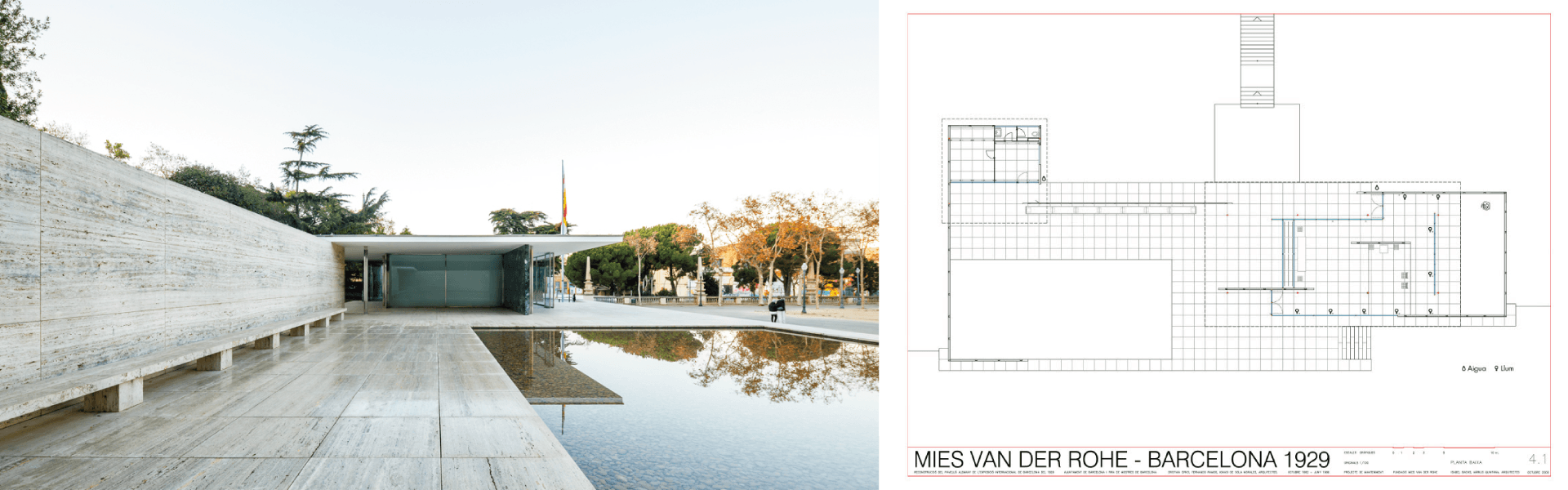
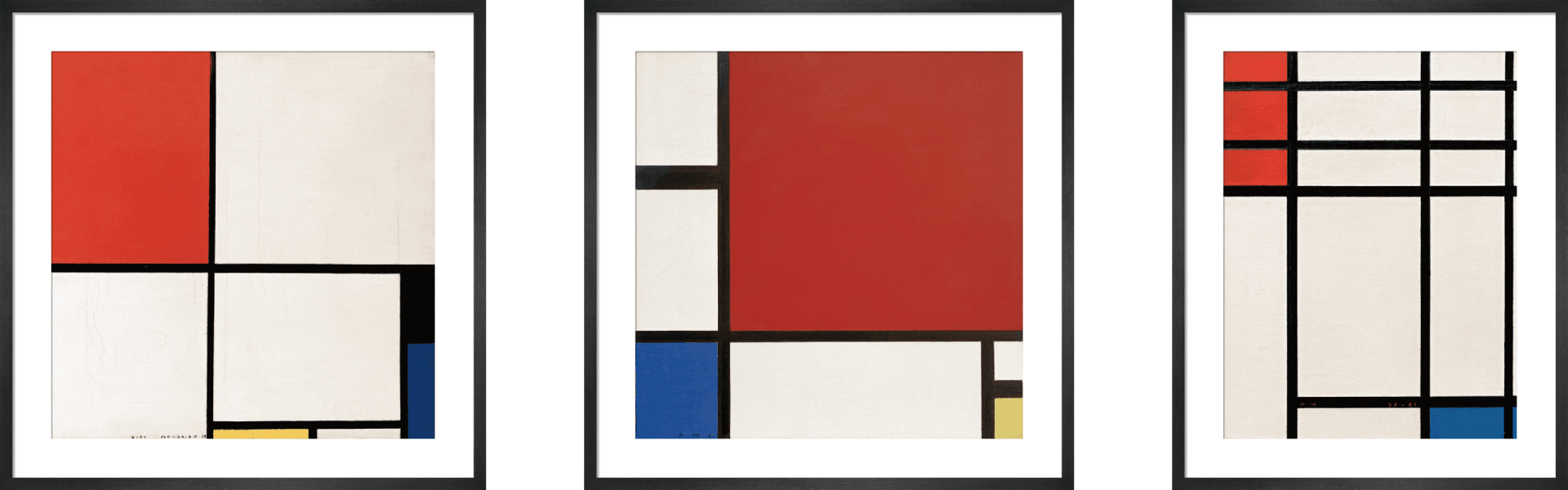
Architectural Plan Design
We envisioned the new architectural plans the Barcelona Pavilion might generate as it transforms freely within virtual space. Analyzing the pavilion's spatial, structural, and aesthetic philosophy, we laid out a set of conditions and created new plans that satisfy them.
2-1. Establishing the conditions
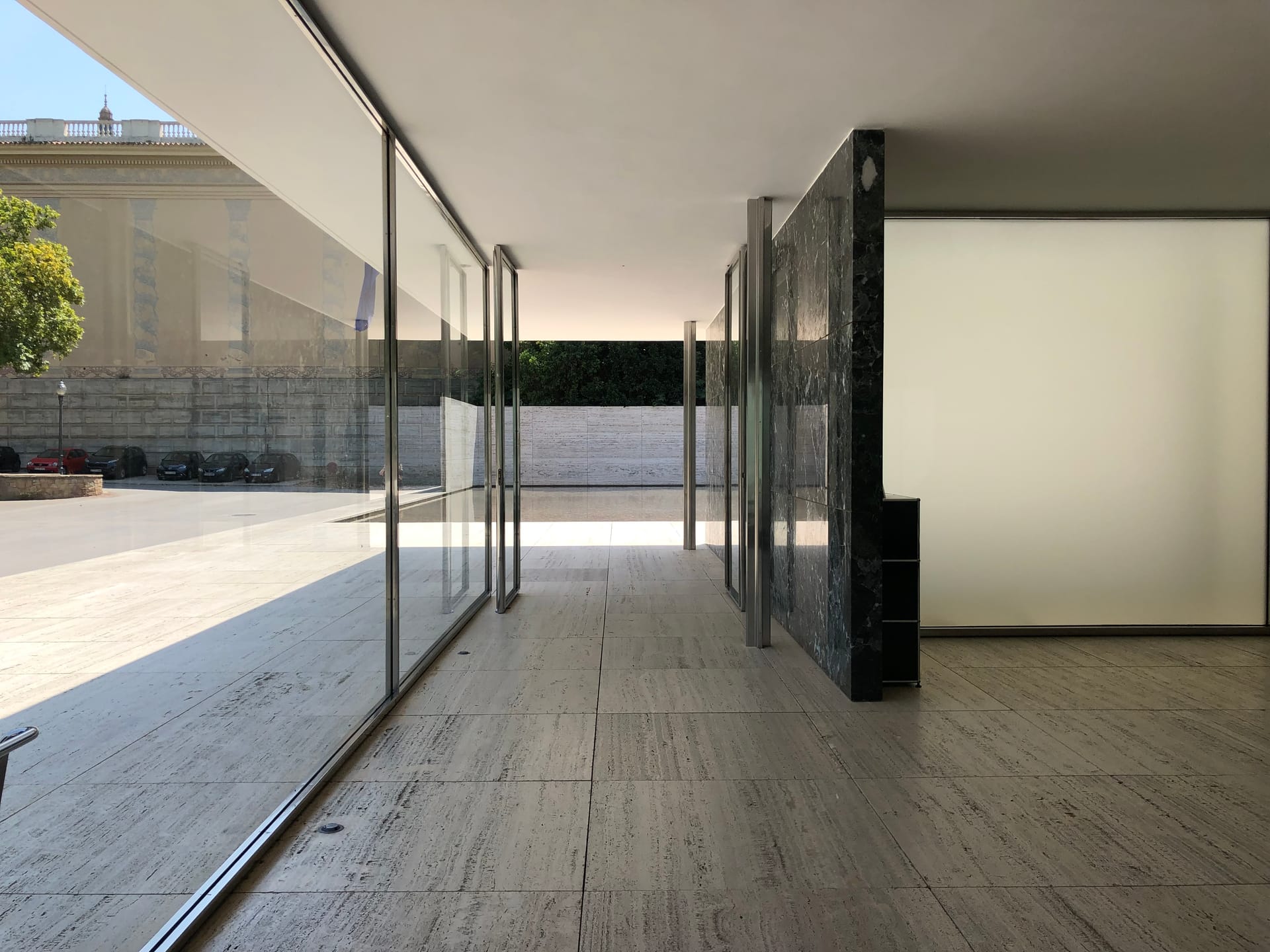
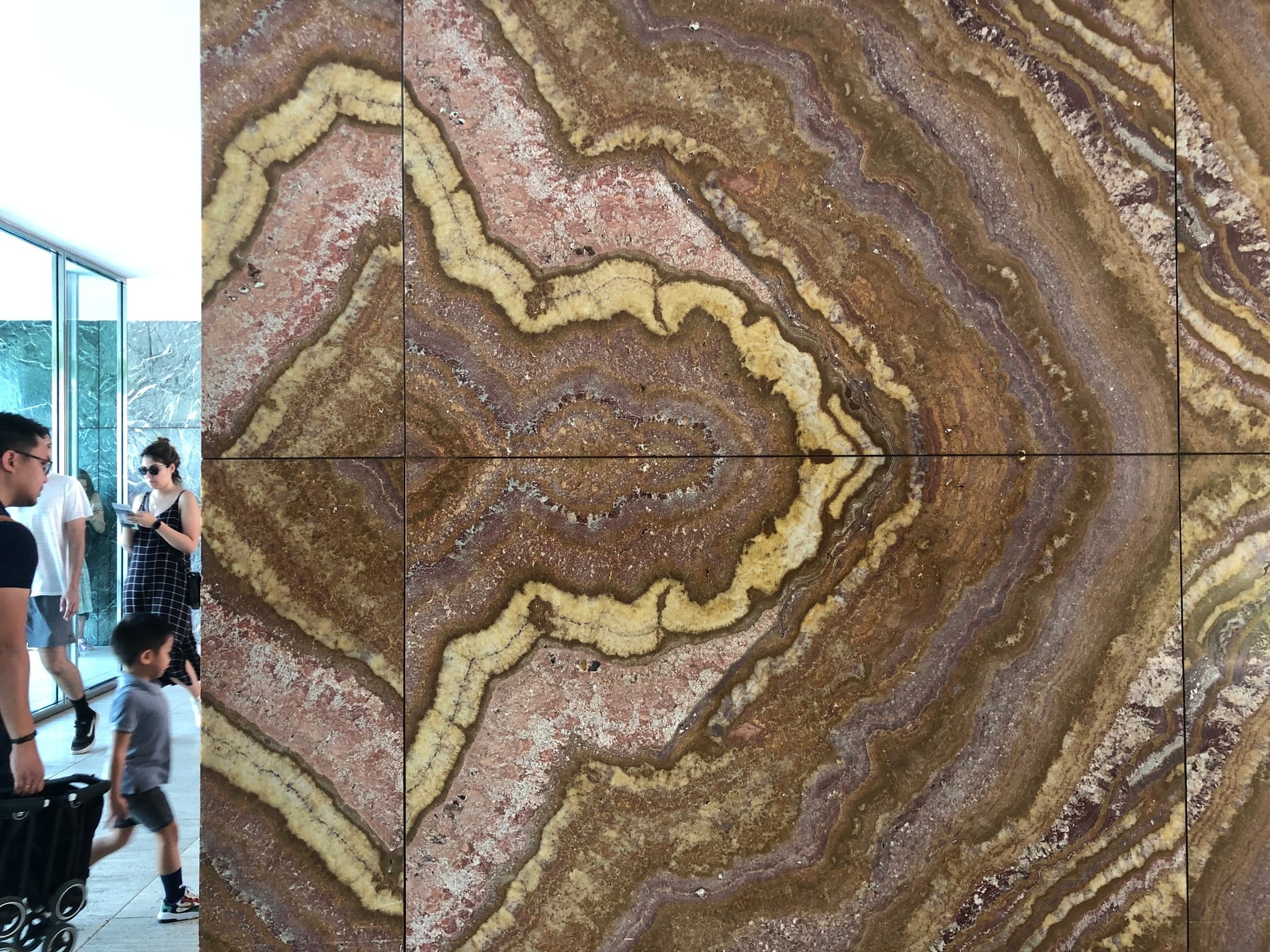
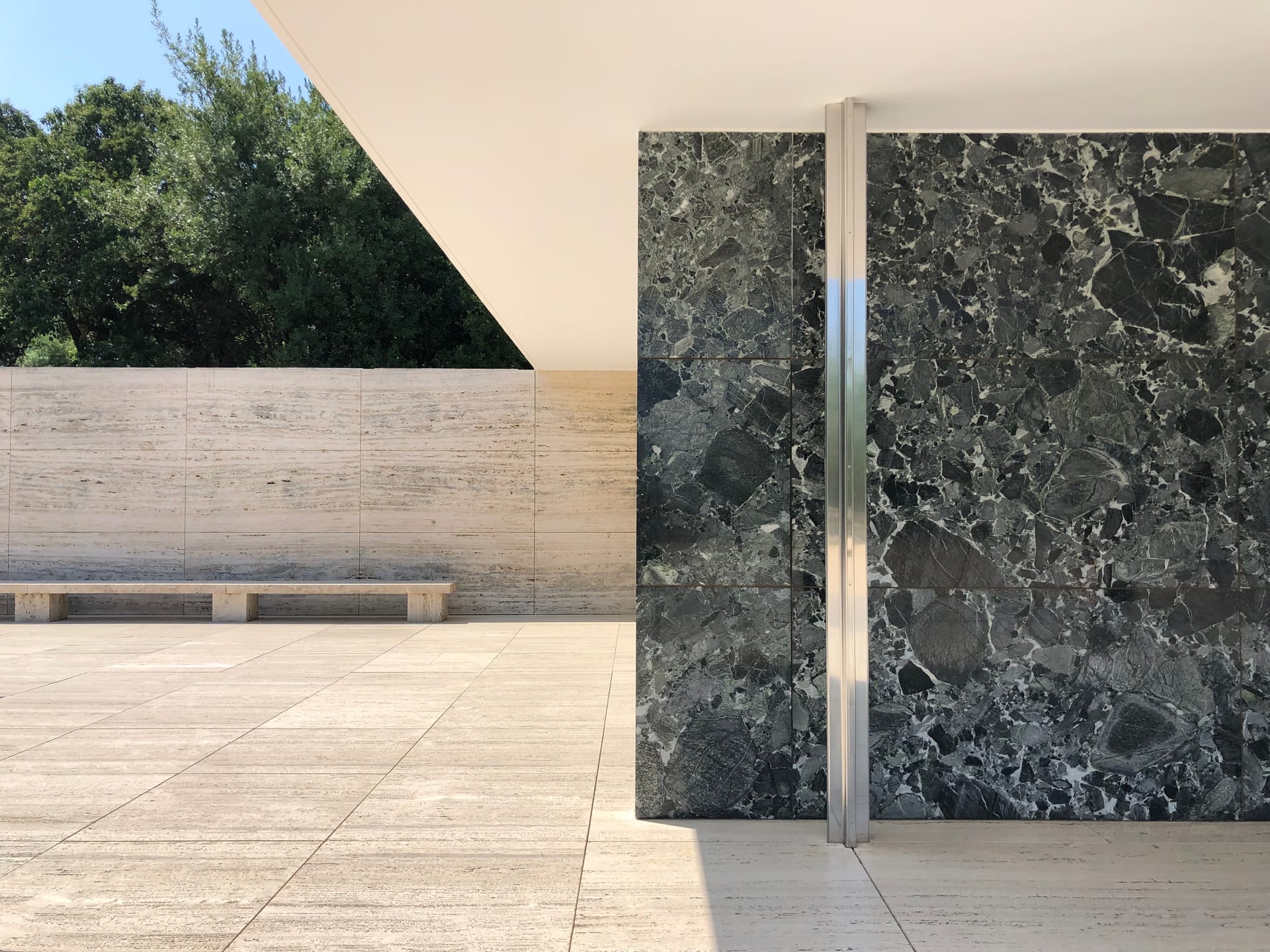
In the Barcelona Pavilion, elements such as the walls, floor, and roof meet one another yet each follows its own independent design logic, so we set conditions element by element. (Photographs below ⓒersatz_Yujin Jang)
A. Marble walls, glass walls
B. The onyx wall
C. The floor
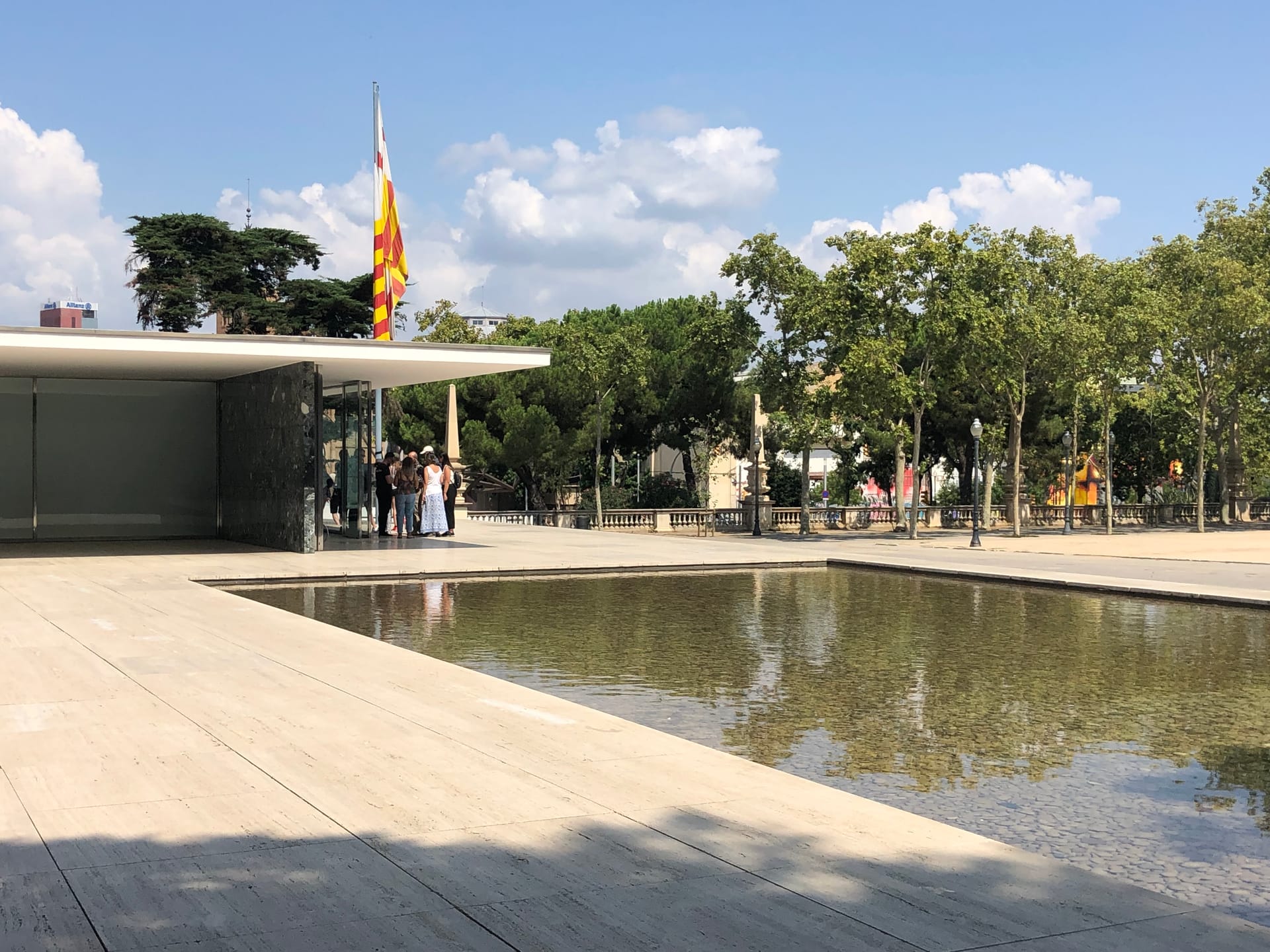
D. Roof and columns
References
2-2. The completed plans
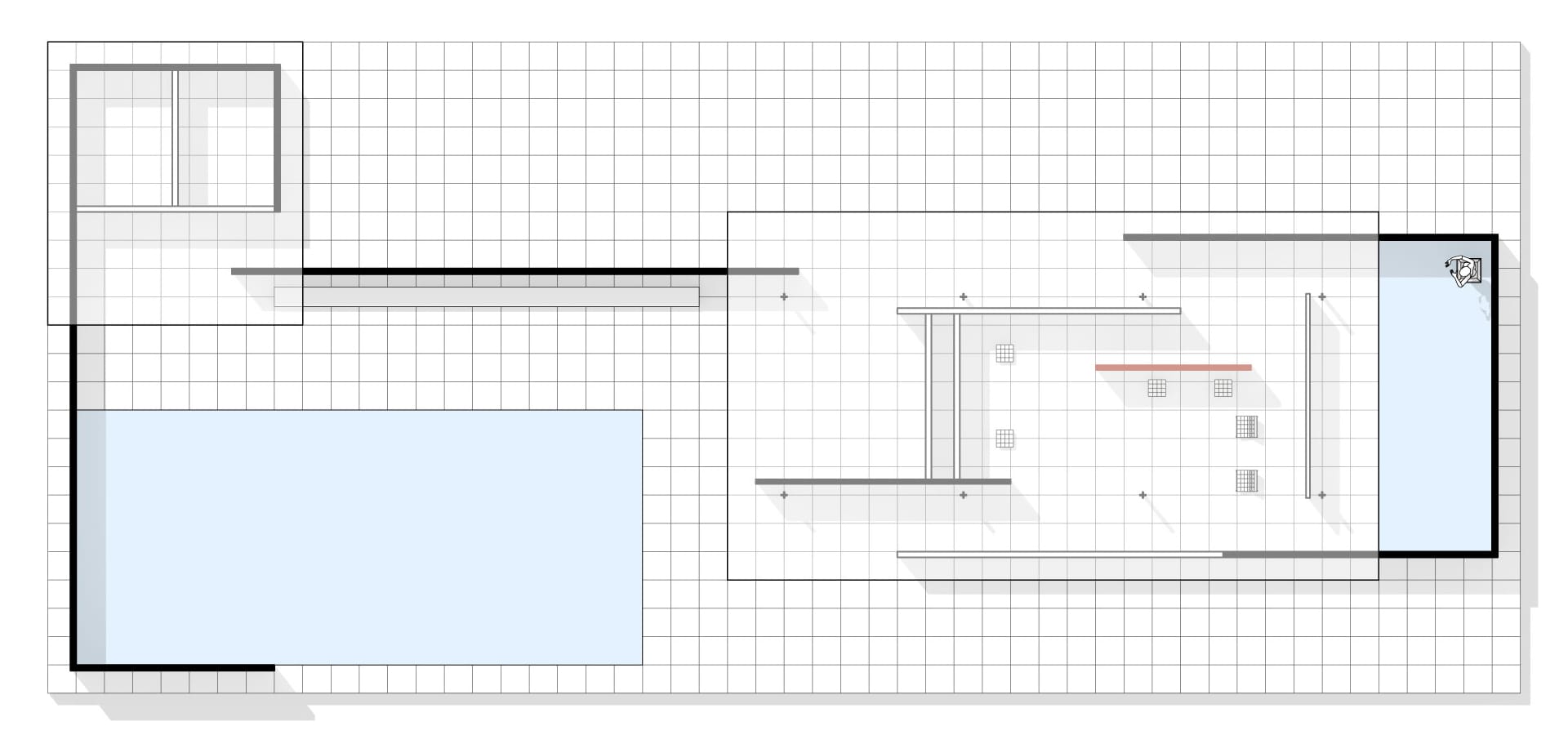
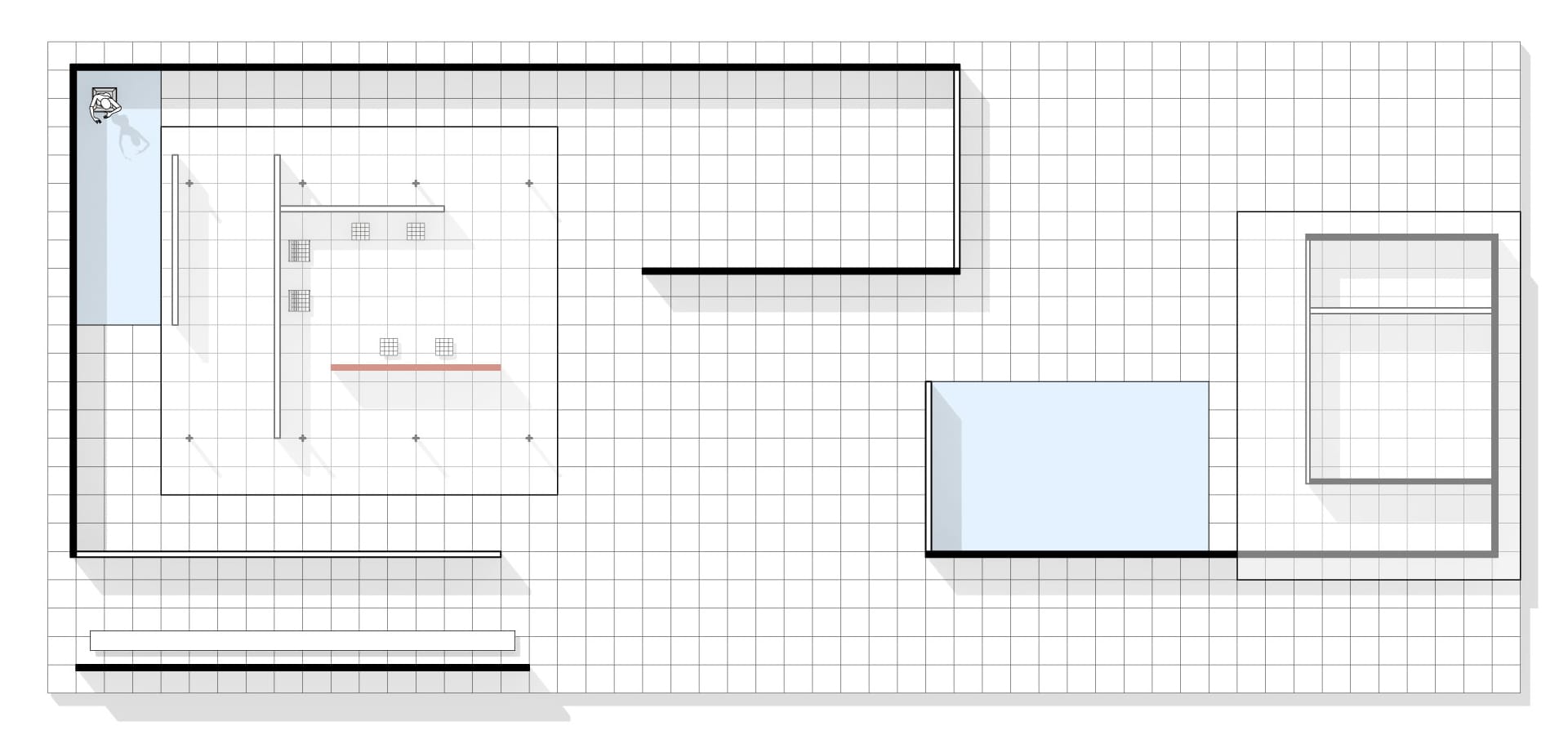
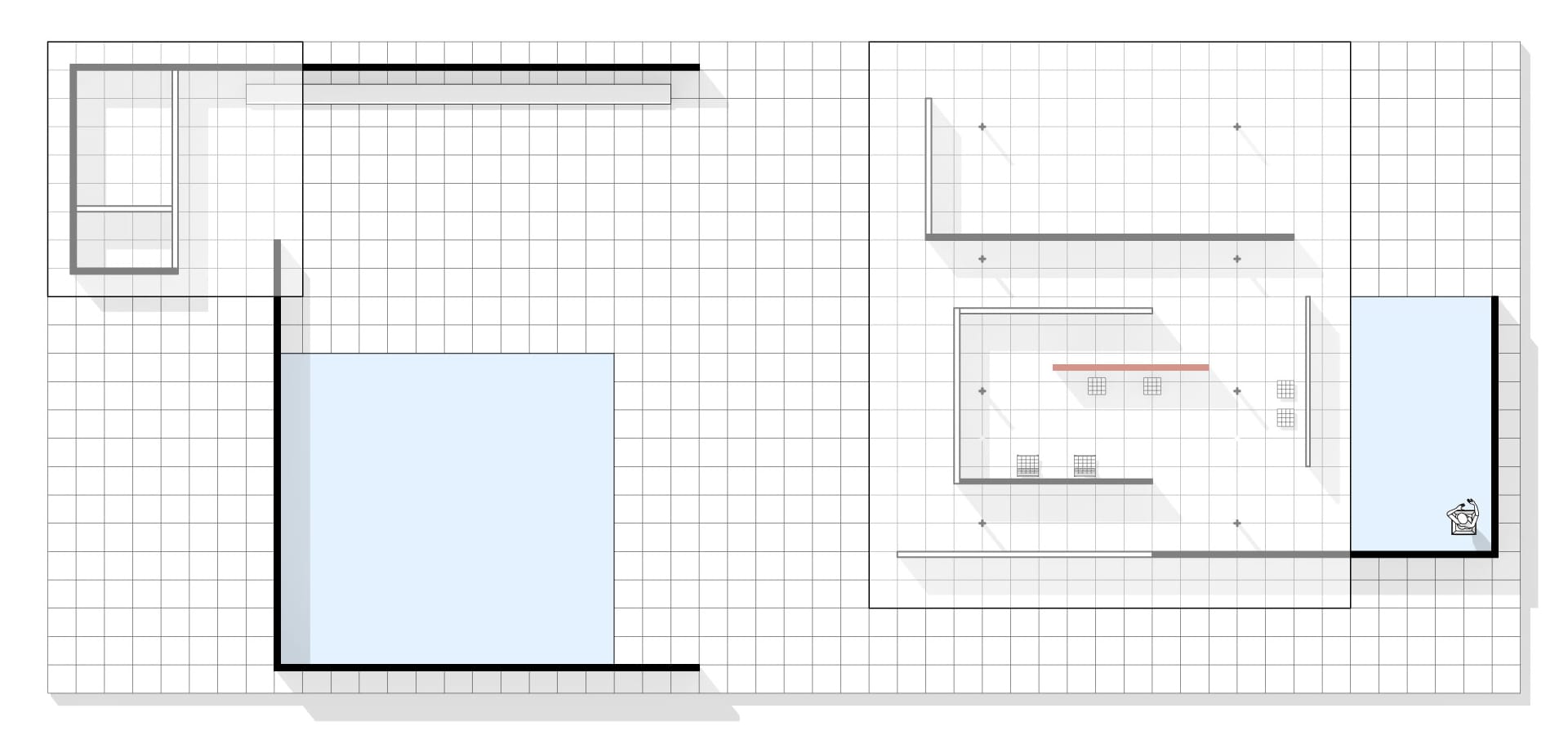
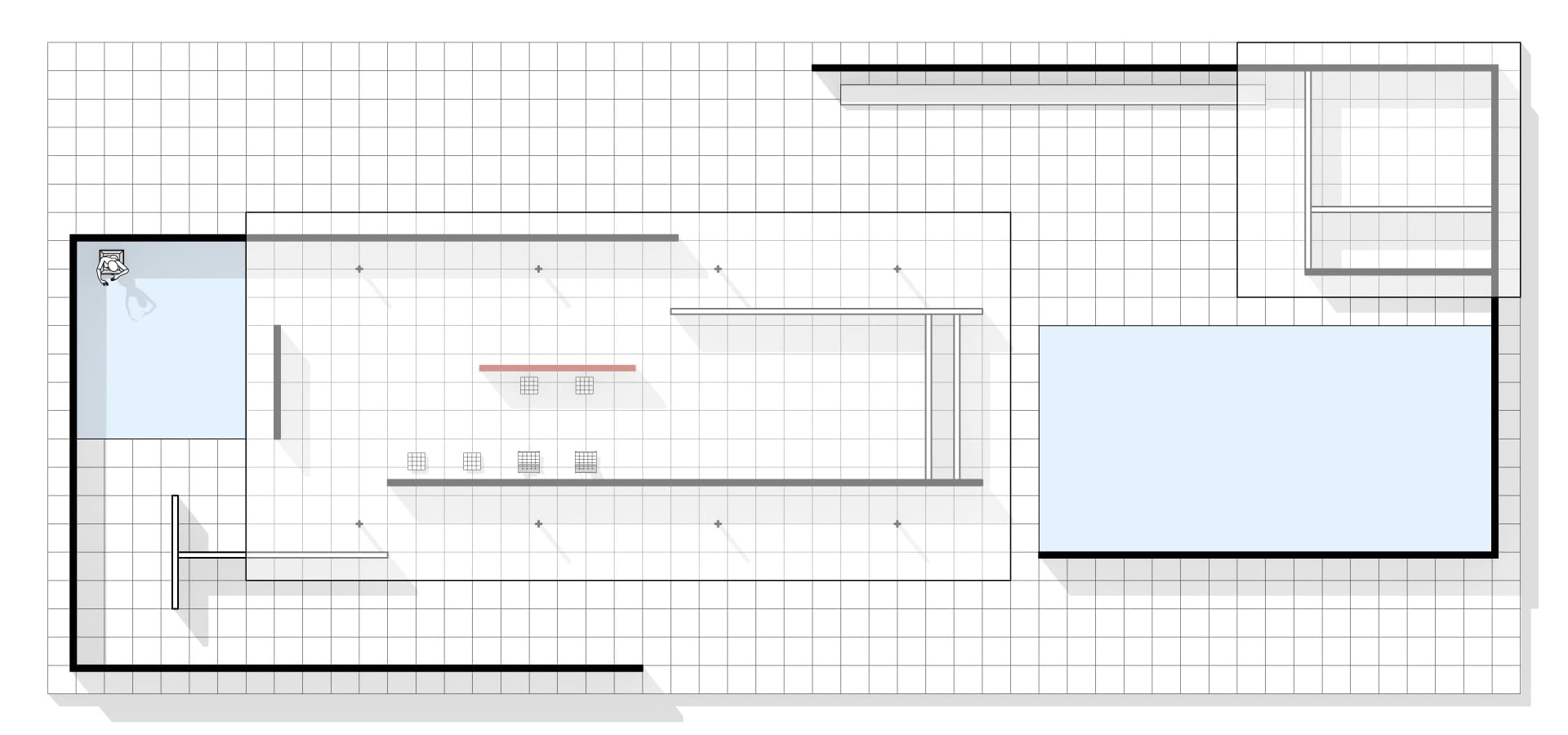
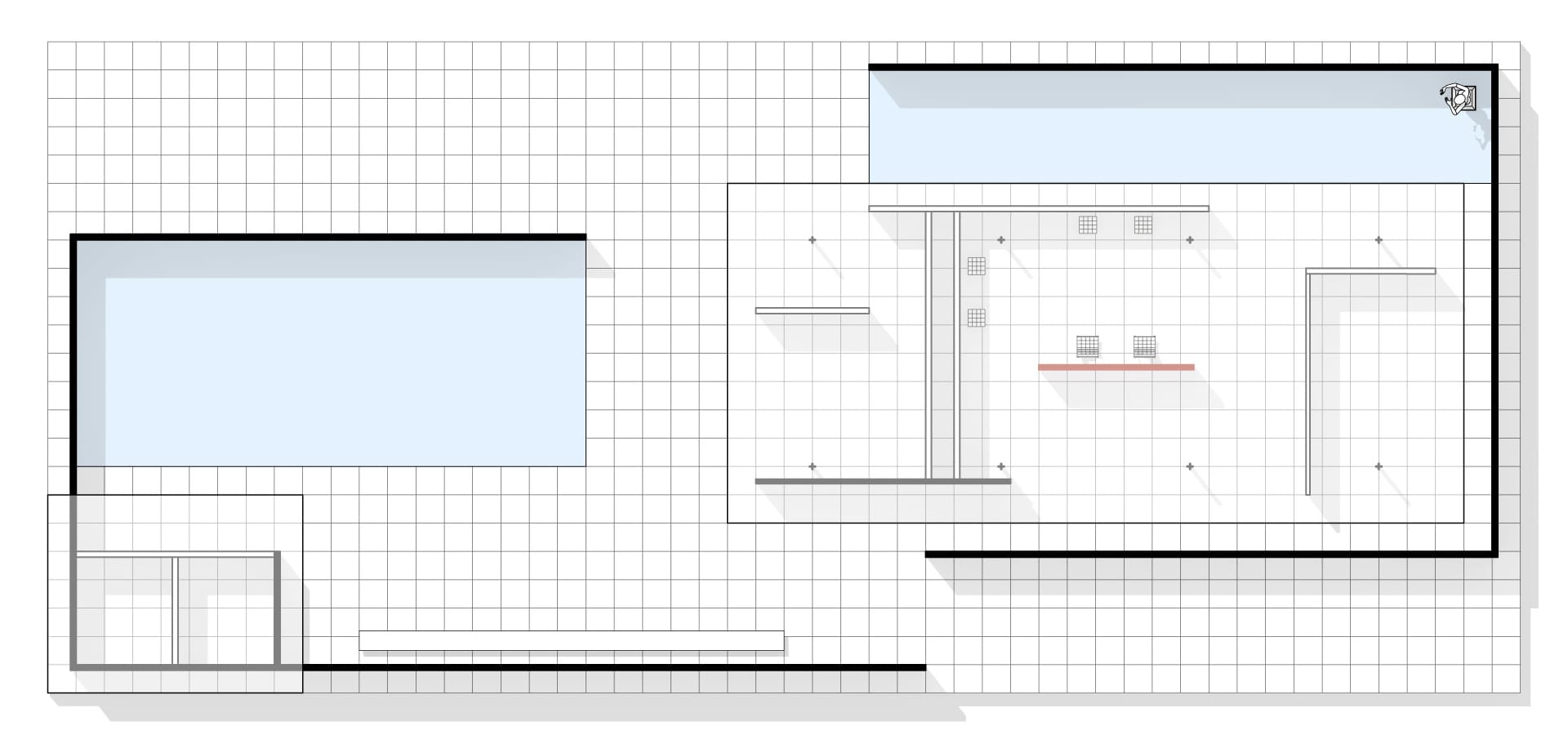
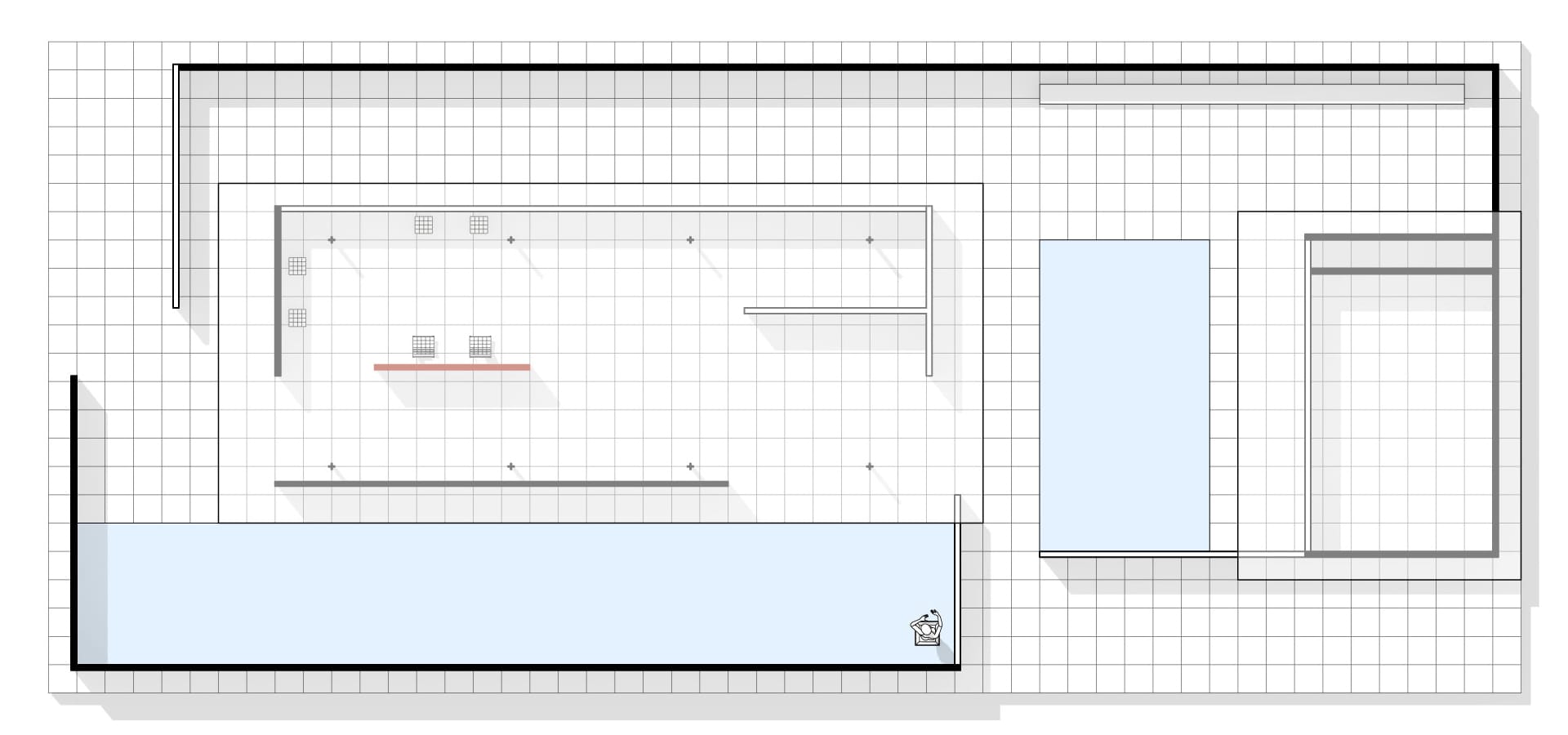
The making process
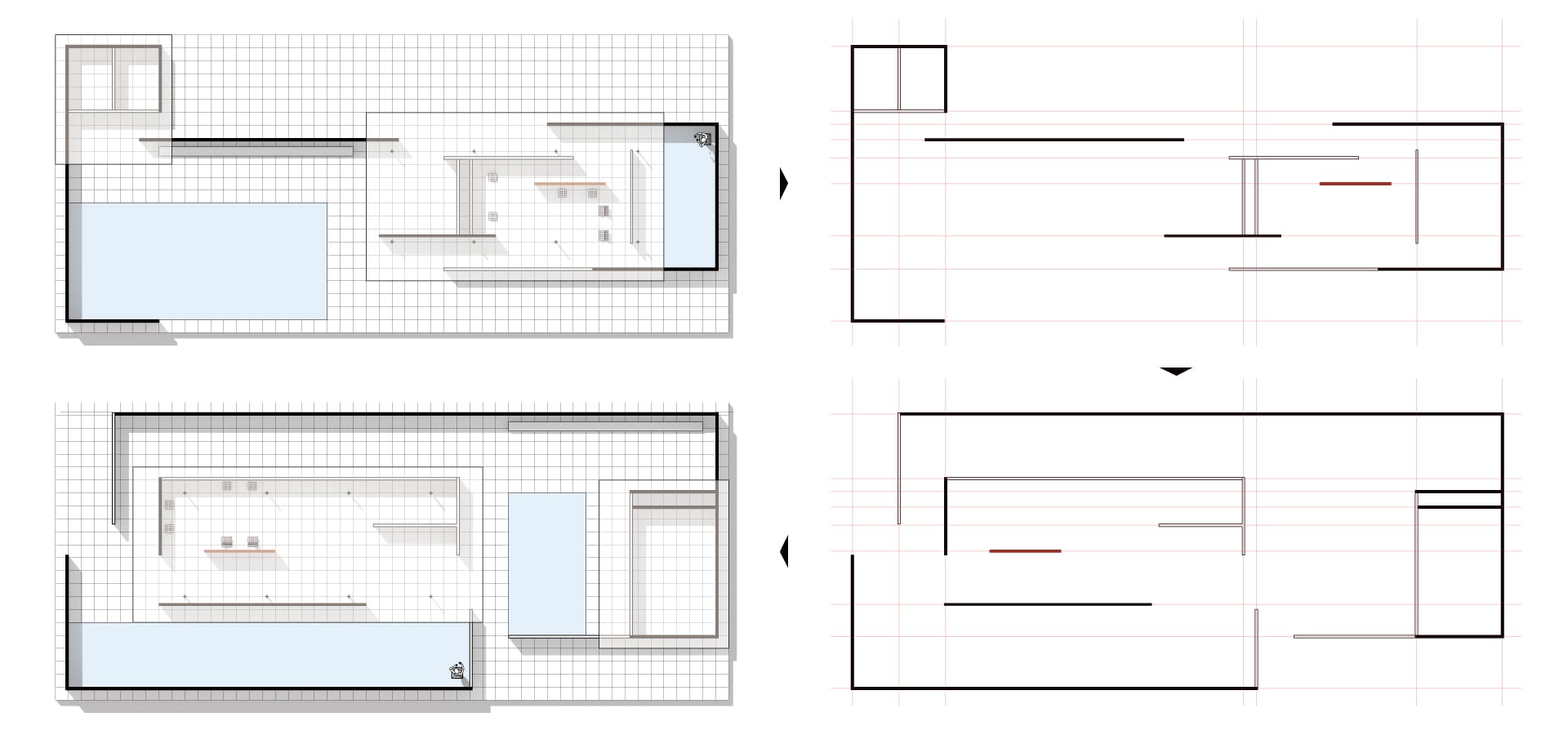
Designing the Transformation
We considered through what movement and material expression the building should transform from one plan into another. Here too we intended the transformation effects to bring out the philosophy of spatial composition we had analyzed in the Barcelona Pavilion.
3-1. Movement
A. Walls
B. Floor and roof
3-2. Material
A. Wall surface material
B. Background
Other transformation candidates
Rendering & Distribution
We decided to present the work in two ways: as a web game and as a film. In the web game, real-time rendering2 lets you roam through the work and experience the space for yourself—and with an HMD3 you can enjoy it in VR as well. The film lets you take in the space at high, pre-rendered quality, through deliberately chosen angles and compositions.
4-1. WEB3D
4-2. Film
In Closing…
The Move is a work that conveys a building's principles of spatial composition by letting you experience, one after another, the latent plan variations of the Barcelona Pavilion—and through this, explores the architectural possibilities of virtual space.
One regret remains: that each new plan had to be designed by hand. If, in the future, AI learning were to generate new plans automatically and link them into the web game in real time, we could produce infinitely many variations, each one different every time—expanding the architectural possibilities of virtual space into yet another dimension. (Written February 2023)